Dental Implants
Sinus Lift
Raises the sinus floor to make room for upper back implants. Often paired with grafting.
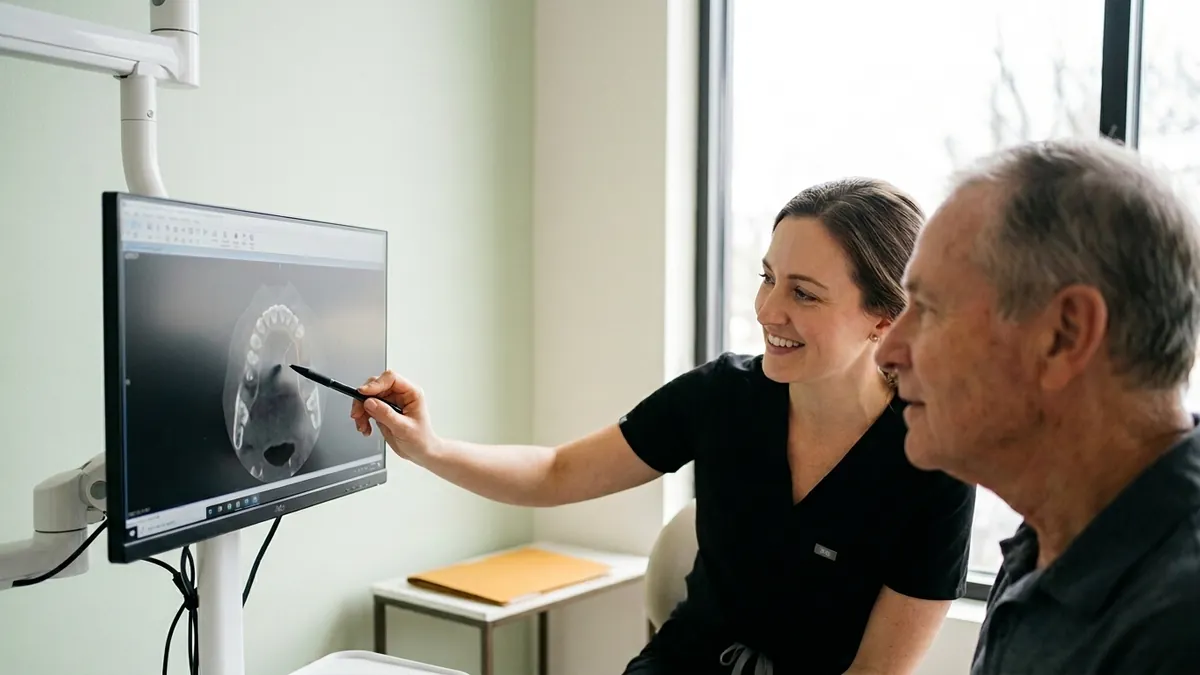
In the upper jaw behind the canines, the sinus cavity sits directly above the tooth roots. When those teeth are lost the sinus often drops, leaving too little bone for an implant. A sinus lift raises the sinus membrane and places graft material underneath to create the height needed.
How it's done
-
01
Imaging
CBCT establishes the residual bone height, which decides between the two techniques below.
-
02
Crestal or lateral approach
With 5 mm or more remaining, the lift can be done through the implant site itself. With less, a small window in the side of the jaw is used.
-
03
Membrane elevation
The sinus lining is lifted carefully. Perforating it is the main complication and usually means stopping and rescheduling.
-
04
Grafting and healing
Graft material is placed and left to mature for six to nine months before implants go in.
Who it suits
Missing upper back teeth with insufficient bone height beneath the sinus.
Where it falls short
Adds six to nine months before implants can be placed. Existing sinus disease needs treating first.
Recovery
Swelling and occasionally minor nosebleeds. You'll be told not to blow your nose for two weeks — this matters more than it sounds.
Get two surgeons to read your case.
Free, and it commits you to nothing. We’ll get back to you as soon as possible.
Start my quote