Cosmetic Dentistry
Zirconium Crowns
Milled zirconia — strong enough for back teeth and the default choice for full-arch work.
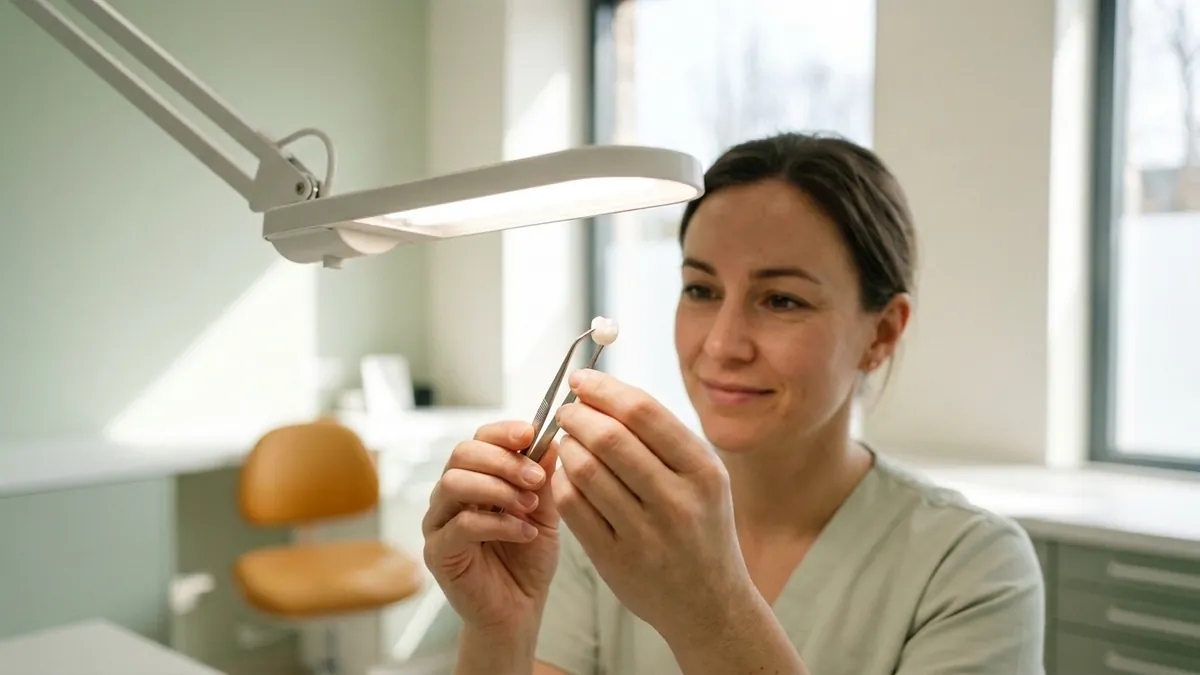
A crown covers the whole tooth rather than just its front face. Zirconia is milled from a solid block, making it considerably stronger than porcelain, which is why it is used on molars and across full-arch bridges. Monolithic zirconia is strongest; layered zirconia trades a little strength for better translucency at the front.
How it's done
-
01
Preparation
The tooth is reduced on all surfaces to make room for the crown, more than for a veneer.
-
02
Scan
An intraoral scan captures the preparation and the opposing bite.
-
03
Temporary
A provisional crown protects the tooth while the final is milled.
-
04
Milling
The crown is milled from a zirconia blank, then stained and glazed, or layered with porcelain at the front.
-
05
Fitting
Contact points and bite are adjusted, then the crown is cemented.
Who it suits
Heavily filled, cracked or root-treated teeth, and any tooth carrying significant bite force.
Where it falls short
More tooth is removed than for a veneer. Monolithic zirconia at the front can look slightly flat next to natural enamel.
Recovery
Some sensitivity for a couple of weeks, particularly if the tooth is vital.
Get two surgeons to read your case.
Free, and it commits you to nothing. We’ll get back to you as soon as possible.
Start my quote